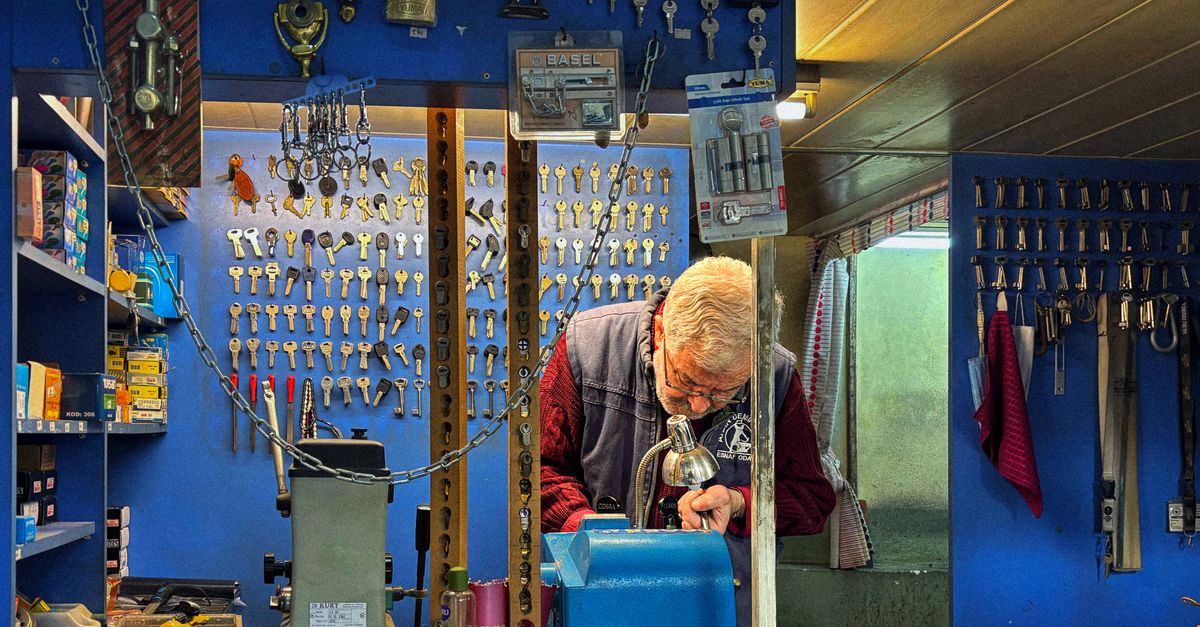

How a Master Key System Setup Actually Works in a Commercial Building
A master key system is built on a concept called a keying hierarchy. At the base level, each tenant or unit receives keys that open only their own doors — this is the change key, also called the servant key. Above that sits the master key, which opens every lock within a defined group, such as a single floor or wing. Grand master and great-grand master keys can then be layered on top, giving building engineers or ownership access to the entire property. The system is engineered by carefully controlling the number of active pins inside each lock cylinder, so that two different key cuts can both operate the same lock without creating a security conflict. When this is done correctly, a tenant's key absolutely cannot open a neighbor's door — a point that matters enormously in a city where building density is as high as it is on any given block in Manhattan.
Keyed-alike configurations work alongside or independently of master keying. In a keyed-alike setup, multiple locks are pinned to respond to the same single key — useful for a tenant who wants every door to their suite (entry, server room, supply closet) opened with one key rather than a ring full of them. Our mobile commercial locksmith team handles both configurations and can combine them: a tenant's suite is internally keyed alike, while the building management still holds a master that covers every suite on the floor. We document every key code, bitting list, and cylinder assignment in a control record, which we hand over to the property manager so future rekeying or expansion can be handled systematically.